


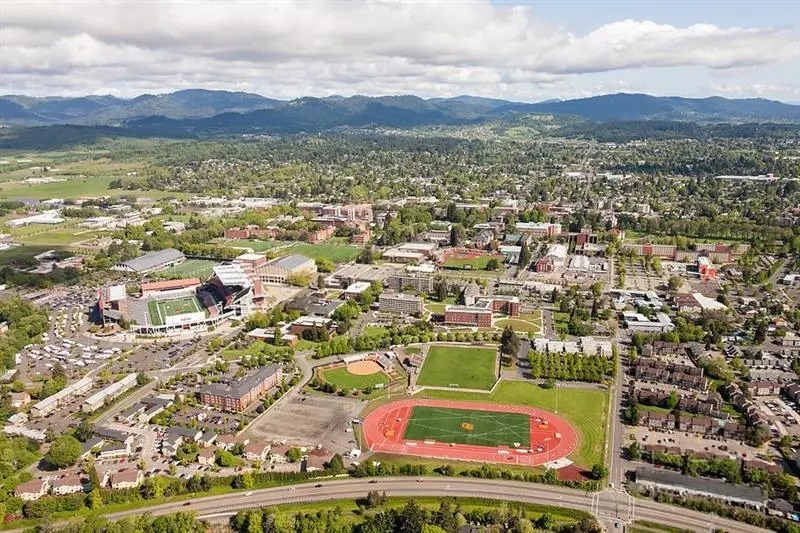
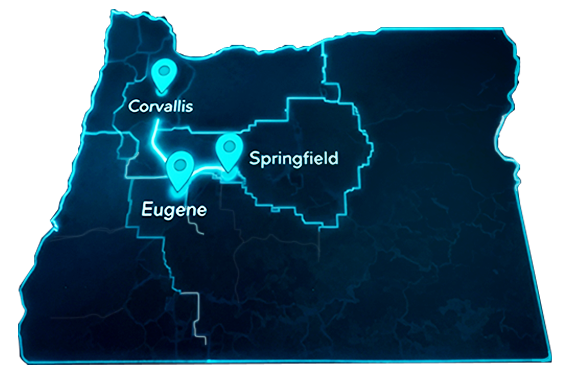
Corvallis
FEDERAL TECH HUB • OSU ANCHOR
- $45M EDA grant for the CorMic semiconductor hub
- $53M CHIPS Act investment via HP Corvallis
- 60+ org consortium: HP, NVIDIA, Intel, Thermo Fisher
- $200M Jen-Hsun Huang Collaborative Innovation Complex
- Decade of high-wage job growth in the region

Springfield
AMAZON LOGISTICS • EUGENE METRO
- Amazon purchased 318K sq ft warehouse near Eugene Airport
- 2,600 daily vehicle trips at full operation
- 97.4% occupancy in nearby self-storage market
- 55,400 residents within a 5-mile radius
- Zero new competing supply under development
97.4%
Market occupancy
~0
New supply in pipeline
22,500+
Households in trade area
~30%/year
Renter turnover rate
775+
New homes by 2029
$976K
Stabilized annual income
49K+
Daily highway visibility
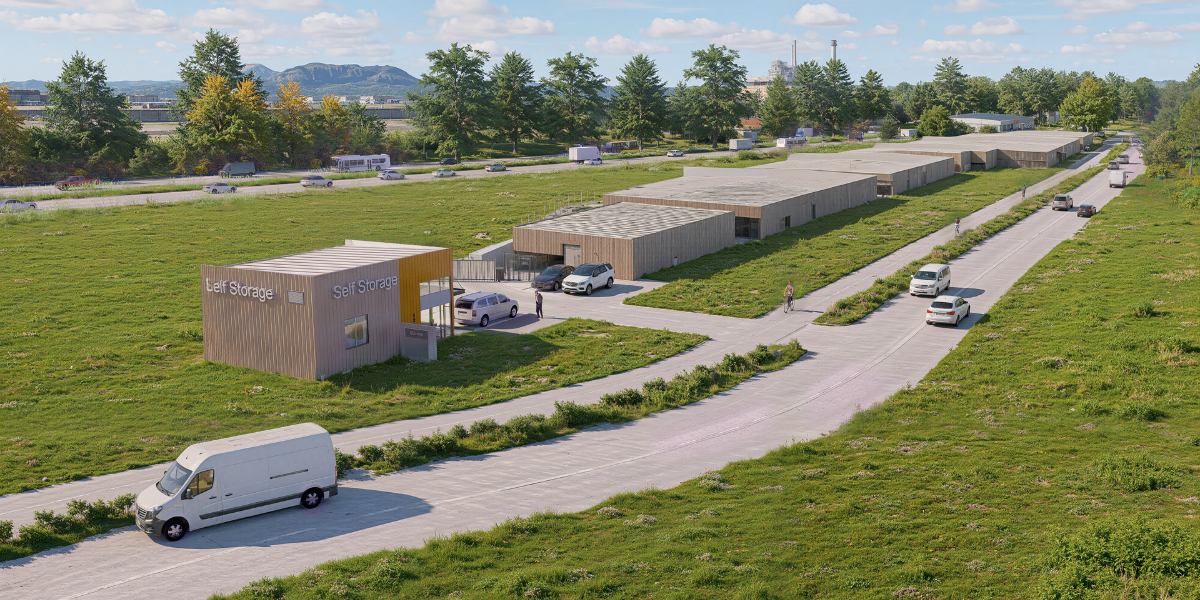
A market at capacity, with no relief in sight
The Springfield trade area has 15 competitors operating across 719,001 square feet of storage — and only 148 units available between all of them. Occupancy across the market holds at 97.4%, a figure that has remained stable through multiple surveys. Nothing meaningful is in the construction or permitting pipeline.
The demand floor isn't dependent on growth. Over 8,700 renter households surround the site, and roughly 30% turn over annually — creating a persistent, predictable absorption base that functions regardless of whether the broader economy is expanding. The feasibility analysis confirms the market can absorb the subject facility plus an additional 31,748 square feet of hypothetical competition before reaching equilibrium. There is no hypothetical competition.
The site at 52nd and Highway 126 carries up to 49,000 vehicles per day. This facility will be seen by the households it serves before they ever search for it.

Oregon's semiconductor capital is being built here.
Corvallis is not a city waiting for an economic catalyst. It has been growing for 28 consecutive years — Oregon State University enrollment has expanded from 18,384 students in 2003 to nearly 25,000 on the Corvallis campus alone today, with housing now so constrained that the university has capped first-year admissions based on available beds. Nearly 20,000 workers commute into the city daily, and research suggests 40% would relocate there if suitable housing existed. It doesn't.
Corvallis is Oregon's most rent-burdened city — not in raw numbers, but in proportion. More than a third of its households spend over half their income on rent. That kind of pressure fosters self-storage demand. People moving in because they finally found a unit. People moving out because they couldn't afford to stay. People downsizing into smaller apartments and putting the rest in storage. Churn at that rate is structural, not cyclical.
The federal Tech Hub designation and the semiconductor investment layered on top of this base are demand accelerants, not the demand itself. The CorMic consortium — anchored by HP, NVIDIA, Intel, Siemens, and Thermo Fisher, with over 60 partner organizations — is projected to generate approximately $1 billion in annual GDP as microfluidics technologies scale. HP is expanding its Corvallis campus. Researchers, engineers, and technicians relocating to work in these facilities arrive without local storage arrangements. They need one on day one.
The site at 3840 SW Deschutes sits in the General Industrial zone — mini-warehouse is a permitted use by right, with no special approvals required.
Capital deployed into this market

Jason Adams
FounderJason has been a real estate business owner since graduating from college in 2001, with diverse experience across residential development, self-storage, car wash, construction, and multi-family. His professional focus is building teams that work in coordinated pursuit of common goals, guided by clear data and actionable metrics.
Outside of work, Jason is focused on being a present dad and husband. He enjoys introducing his family to the outdoors and personally stays active through trail running and cross-country skiing.

Murali Pillai
Head of Investor RelationsMurali brings over 15 years of experience in financial services, customer service, and account management. As Head of Investor Relations at Signal Ventures, he focuses on building strong investor relationships, providing attentive post-investment support, and ensuring clear, consistent communication throughout the life of each offering.
Murali's background spans both institutional and client-facing finance, giving him a practical understanding of what investors need — not just at the point of commitment, but through every stage of the investment.